
After suspected accidental e-liquid exposure, seeking qualified advice is more urgent than completing a product report. In the United States, FDA directs people to Poison Control at 1-800-222-1222 if someone drinks e-liquid or a child may have been exposed, even when the exposure is uncertain. For an immediate emergency, contact emergency services.
The FDA’s exposure and storage guidance explains that nicotine-containing liquid can seriously harm children. Do not rely on the product’s appearance or an apparently small quantity to decide that advice is unnecessary.
Put the call before the paperwork
Tell the adviser what happened and follow their instructions. If you know the approximate time, product identity or way the contact occurred, communicate it. Mark uncertain information as uncertain. Do not delay the call while searching for a receipt, estimating a quantity or trying to reconstruct every detail.
This guide does not calculate a safe amount or prescribe a home treatment. Advice depends on the circumstances. Outside the United States, use your local poison information service or emergency healthcare route; the U.S. contact is not a substitute for a local service.
Prevent a second exposure
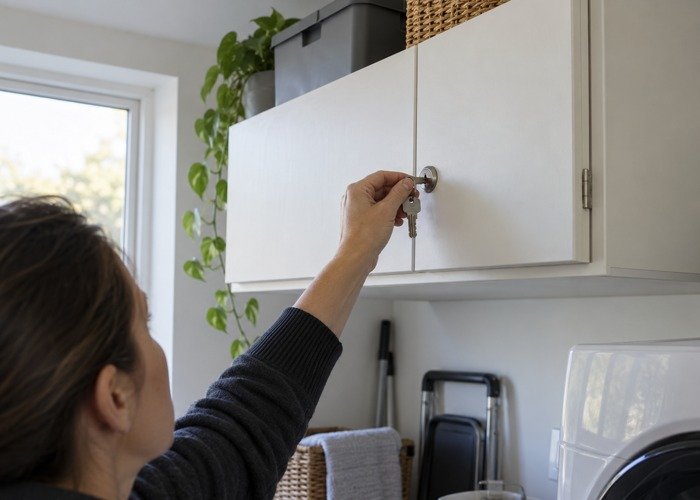
Keep children and pets away from the affected area while obtaining guidance. FDA recommends keeping devices and liquids in their original containers, elevated and out of children’s and pets’ reach and view. Visitors’ bags and coats also need attention when they contain these items.
A useful household review asks who can access a storage location and whether a visitor knows where to put their belongings. Do not transfer a liquid into a food or drink container. Give household members the same storage expectation rather than assuming everyone recognizes an unfamiliar item.

Keep a simple record after urgent needs are addressed
When it is safe, note the time, what you observed and which service gave advice. Separate instructions you received from actions already taken. If a healthcare professional requests product information, provide details available from existing packaging or records without creating additional exposure.
Keep medical details private. A household note can help with a later conversation without being posted online. If someone else was present, distinguish what you saw yourself from what they told you.
Reporting is a separate step
FDA accepts reports of unexpected health or product problems, but a safety report does not deliver emergency care. After obtaining needed help, the incident-report preparation guide can help organize a factual account. The FDA’s official reporting page explains the reporting route.
For accidental e-liquid exposure, use the appropriate help service first, describe uncertainty honestly and follow the advice you receive. Storage changes and record keeping are useful follow-up tasks; neither should delay qualified care.