
Before removing a medicine from active supplies, check that it is genuinely expired, unwanted or no longer needed. If you are unsure whether to continue a prescribed medicine, ask the pharmacist or clinician. Disposal information does not authorize changing treatment, sharing medicine with somebody else or keeping an item for an unassessed future illness.
For current official guidance, see FDA unused-medicine disposal information.

Ask about take-back options
FDA identifies drug take-back as the preferred route for most unused medicines. Contact a recognized pharmacy or local collection program and confirm what it accepts, when it is available and any packaging requirements. Do not assume that every pharmacy has the same service or that an event advertised for a past date is still operating.
Check exceptions before moving items
Ask specifically about liquids, inhalers, needles or other unusual items rather than assuming one collection box accepts everything. Medicines, sharps, batteries and nicotine-device waste can require different routes. Do not put an e-cigarette into a medicine collection container unless the operator explicitly accepts that waste. Keep items secure while arranging the correct route.
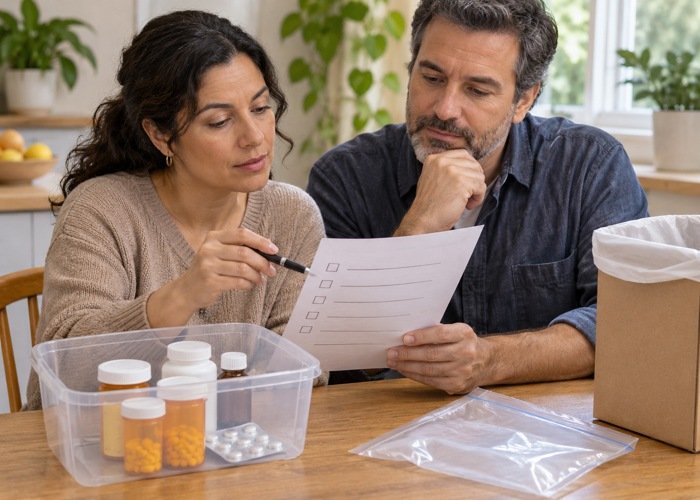
Use product-specific instructions when needed
FDA explains that disposal alternatives depend on the medicine and whether take-back is readily available. Do not flush medicines as a blanket rule or improvise a method from a social-media suggestion. Ask a pharmacist about the item and follow current official product-specific instructions. Protect personal information on packaging when appropriate without removing information needed for identification before you receive advice.
For a practical way to check an explanation with a professional, see checking healthcare instructions in your own words. Keep unresolved questions visible and follow the instructions of the service responsible for your care or safety.
Does this replace individual instructions?
No. Confirm the steps that apply with the responsible professional or local service.
What should I keep in my notes?
Keep the original source, relevant dates, contact details and the next action you have confirmed. Avoid recording assumptions as facts.
Should I wait for paperwork during an emergency?
No. Seek urgent assistance promptly and follow emergency-service instructions.