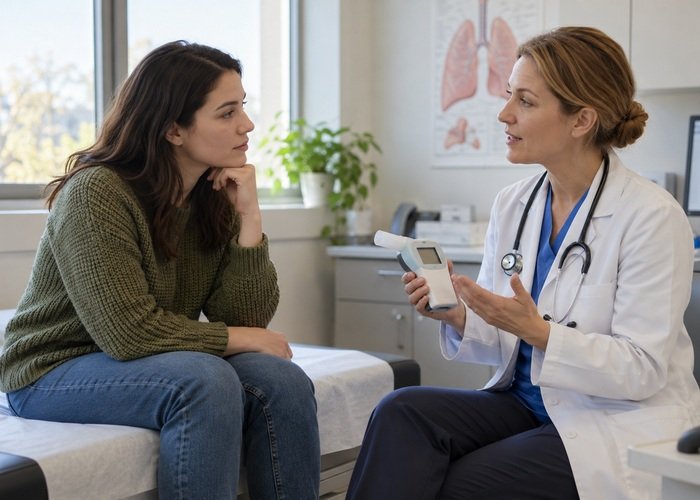
A carbon monoxide breath check and vaping history answer different questions. Tell the healthcare professional about vaping, smoking and other relevant exposures even if a breath result is low. Do not use a single reading as proof that you have no nicotine exposure or that a product is safe.
The Primary Care Respiratory Society’s assessment guidance distinguishes exhaled carbon monoxide testing from cotinine testing, which relates more specifically to nicotine exposure. The useful question is what the particular test measures, not whether it can stand in for a complete history.

Keep the result attached to its purpose
A clinician may use a breath check within a smoking-support or respiratory assessment. Ask why it was offered and how the result will be used. A measurement does not, by itself, provide a complete explanation of symptoms, all environmental exposures or every substance someone has used.
Share your actual pattern of smoking and vaping rather than choosing the history you think matches the number. Include nicotine medicines if the team asks about them. If you do not know the contents of a product, say so. Do not withhold information because a test seems unlikely to detect it.
Questions to ask when reviewing a result
- What does this test measure, and what question is it intended to answer?
- What information about smoking, vaping and other exposure do you need?
- Does this result need another assessment or follow-up?
- Whom should I contact if symptoms or circumstances change?
Keep the clinician’s explanation with the result. If you receive a report without an explanation, ask the ordering service to interpret it rather than comparing the number with a stranger’s post online. This guide does not supply cut-offs, test-evasion methods or a diagnosis from a reading.

Do not overlook a possible environmental source
The NHS carbon monoxide poisoning information explains that carbon monoxide can come from fires and fuel-burning appliances. If poisoning is suspected, go outside and seek medical advice promptly; do not return to an affected building until advised. Severe symptoms require emergency help through your local emergency service.
A past low breath reading is not a reason to ignore a new exposure concern. Do not stay inside to repeat a test or investigate an appliance yourself. Clinical assessment and a building’s safety assessment are different tasks.
If you are seeking help for symptoms after vaping, describe those symptoms and obtain appropriate care. The breathing symptoms guide explains why medical care should come before collecting product details.
Common interpretation questions
Is this the same as a nicotine test?
No. Ask which substance the ordered test measures; exhaled carbon monoxide and nicotine-related testing are different assessments.
Can a low reading establish product safety?
No. A result does not evaluate every possible hazard or replace a clinical history.
Should I still tell the clinician that I vape?
Yes. For a carbon monoxide breath check and vaping discussion, an honest history gives the clinician information a number alone cannot provide.