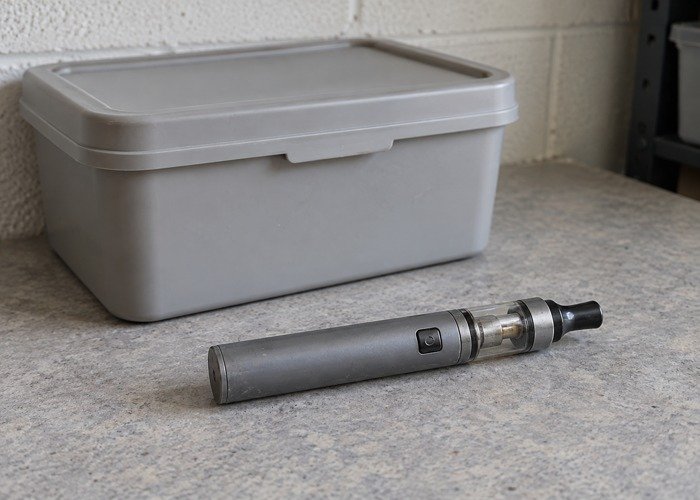
U.S. household guidance · Sources checked October 11, 2026
For safe e-cigarette disposal in the United States, start with your local household hazardous waste program. Ask whether it accepts intact vaping devices containing a lithium battery and residual nicotine. Do not put them in household trash or curbside recycling. The EPA’s consumer disposal guidance recommends household hazardous waste collection.
The practical challenge is finding a program that accepts the whole device. A listing for “battery recycling” does not, by itself, confirm acceptance of an e-cigarette. Before making a trip, describe the item clearly and obtain the facility’s current instructions.
Start with your city or county waste agency
Search for your city or county name followed by “household hazardous waste” or “HHW.” Open the local government website and look for its accepted-items list, collection calendar and contact number. The EPA’s household hazardous waste resource also recommends contacting local environmental, health or solid waste agencies.
If the website lists batteries but says nothing about vaping devices, treat acceptance as unresolved. The useful question is whether the program can handle an intact electronic nicotine device, rather than whether it recycles a loose battery. Keep the webpage open when you call so you can ask about any unclear wording.
A short search note can prevent a wasted journey: record the facility name, official website, contact number and date of the answer. Include any appointment instructions. This is especially useful when a search result points to an old collection event rather than a current service.

Ask these questions before you travel
You can use this message when contacting a collection program:
“I have a used household e-cigarette with a built-in lithium battery and possible nicotine residue. The device is intact. Do you accept this item, and what handling and drop-off instructions should I follow?”
If it is damaged or leaking, say so at the start. Do not describe it as an ordinary used battery. Then confirm:
- Does the program accept the entire device, including any remaining nicotine liquid?
- Are there residency requirements, appointments, fees or quantity limits?
- Does its procedure differ for a leaking, swollen or otherwise damaged device?
- What packaging and transport instructions apply to this particular item?
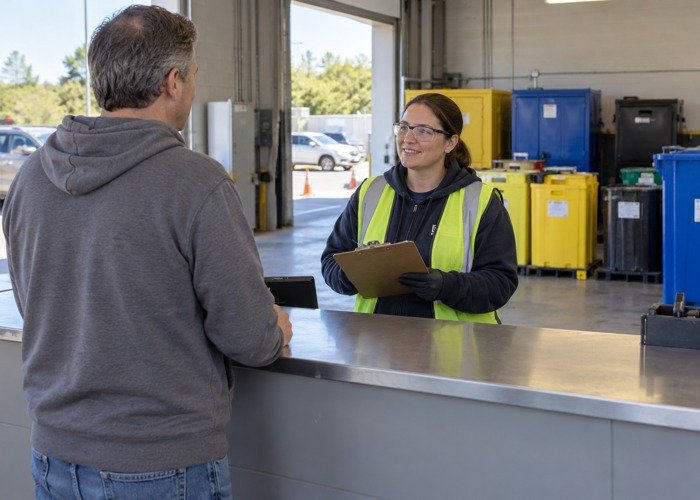
- Where should you go on arrival, and whom should you tell about its condition?
Read the answer back if it is ambiguous. “Bring batteries” and “bring intact e-cigarettes” are different instructions. Ask for a webpage or written confirmation when available, and check the opening hours close to the planned visit.
Keep a sealed device intact
Do not pry open a sealed device to turn it into a battery-recycling item. EPA’s e-cigarette collection guidance warns against removing embedded batteries or cartridges that were not designed for easy removal because doing so can cause fires. That warning is relevant even when the purpose is disposal.
General instructions for loose batteries should not be applied automatically to an assembled vape. The EPA’s used lithium-ion battery guidance discusses battery collection and damaged items; ask the receiving facility how those instructions apply to your whole device.
Separate routine disposal from an immediate hazard
A device that is smoking, burning or rapidly heating is not a routine drop-off item. Keep people away and contact local emergency services if there is an immediate danger. Do not carry an actively hazardous device to a collection counter or attempt to dismantle it.
Stop using or charging a device that is damaged, swollen, leaking or unusually hot. The FDA’s battery fire guidance explains the risks associated with vaping devices and recommends following manufacturer care instructions. For a disposal decision, tell the local facility about the condition before moving the item.
What if the first facility says no?
Ask your municipal waste agency to identify a program that accepts intact nicotine-containing devices. If a permanent site is unavailable, ask about a scheduled HHW collection event. Do not assume a retailer’s battery box or an electronics collection service accepts vapes; confirm with the operator.
Keep a simple contact log rather than repeating the same general search. Record “does not accept intact nicotine devices” when that is the answer. At the next call, explain what has already been ruled out and ask for a specific referral.
Product support and waste collection have different roles
If a device has a product-quality issue, the AIRSIPGO warranty support page explains what information to prepare. Photograph the issue only when safe. Do not delay emergency action to preserve evidence, and do not mail a hazardous device without an approved process.
The site’s safety and support FAQ provides broader context. A support response does not establish that a local waste facility accepts the device. Confirm that separately with the receiving program.
This guide concerns household items. Retailers, schools and other organizations should consult EPA’s separate collection guidance and applicable local requirements rather than assuming a residential program covers their waste.
Before leaving home, you should have three answers: the facility accepts your exact item, it knows about any damage, and you understand its handling and arrival instructions. Those confirmations make safe e-cigarette disposal a concrete next step.